

Broadcasting Technology is where innovation meets imagination, and the world’s stories leap from signal to screen with breathtaking precision. In an age where communication moves at the speed of light, broadcasting stands as one of the most powerful engines of connection—shaping how we share news, culture, creativity, and real-time moments across the globe. This sub-category dives into the evolving ecosystem behind every transmission, from cutting-edge audio workflows and multi-camera production to cloud-based streaming pipelines, satellite delivery, and the digital tools redefining broadcast control rooms. Whether you’re fascinated by the engineering behind live events, curious about the tech powering global news networks, or exploring the future of immersive broadcasting—this is your gateway to the systems, gear, and breakthroughs moving the industry forward. Here, you’ll find articles that simplify the complex, spotlight emerging trends, and reveal the innovations transforming how content travels from creators to audiences. On Communication Streets, Broadcasting Technology isn’t just a field—it’s a living, evolving pulse of global storytelling. Step inside and discover how the broadcast world truly works.
A: Content is captured, mixed, encoded, transmitted (RF or IP), then decoded by receivers or apps.
A: Encoding, routing, network hops, and safety delay units all add a few seconds before signals arrive.
A: A screener answers first, then routes selected callers into the console on dedicated phone channels.
A: A mixer, mics, headphones, playout computer, phone interface, processing, and a link to the transmitter.
A: Streaming is growing fast, but over-the-air and cable/satellite still reach huge audiences worldwide.
A: Automation, backup power, redundant equipment, and remote monitoring all work together continuously.
A: Differences in resolution, bitrate, codec settings, and upscaling all affect perceived picture quality.
A: Yes; many facilities now use remote production where control rooms manage distant studios and venues.
A: Specialized systems insert official alert tones and messages into the broadcast signal automatically.
A: Technical fluency, clear communication, problem-solving under pressure, and comfort with evolving tools.
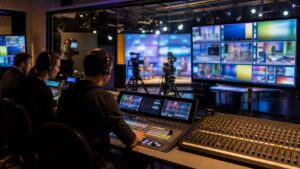
What Is Broadcasting Technology? A Complete Beginner’s Guide
Explore What Is Broadcasting Technology? A Complete Beginner’s Guide in plain language with practical examples, strategic context, and clear guidance for applying the idea in real communication work.

How Broadcasting Technology Works: From Signal to Screen
Explore How Broadcasting Technology Works: From Signal to Screen in plain language with practical examples, strategic context, and clear guidance for applying the idea in real communication work.
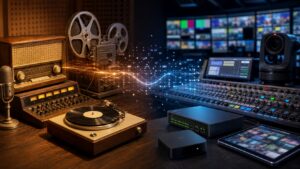
The Evolution of Broadcasting Technology: Analog to Digital Explained
Explore The Evolution of Broadcasting Technology: Analog to Digital Explained in plain language with practical examples, strategic context, and clear guidance for applying the idea in real communication work.