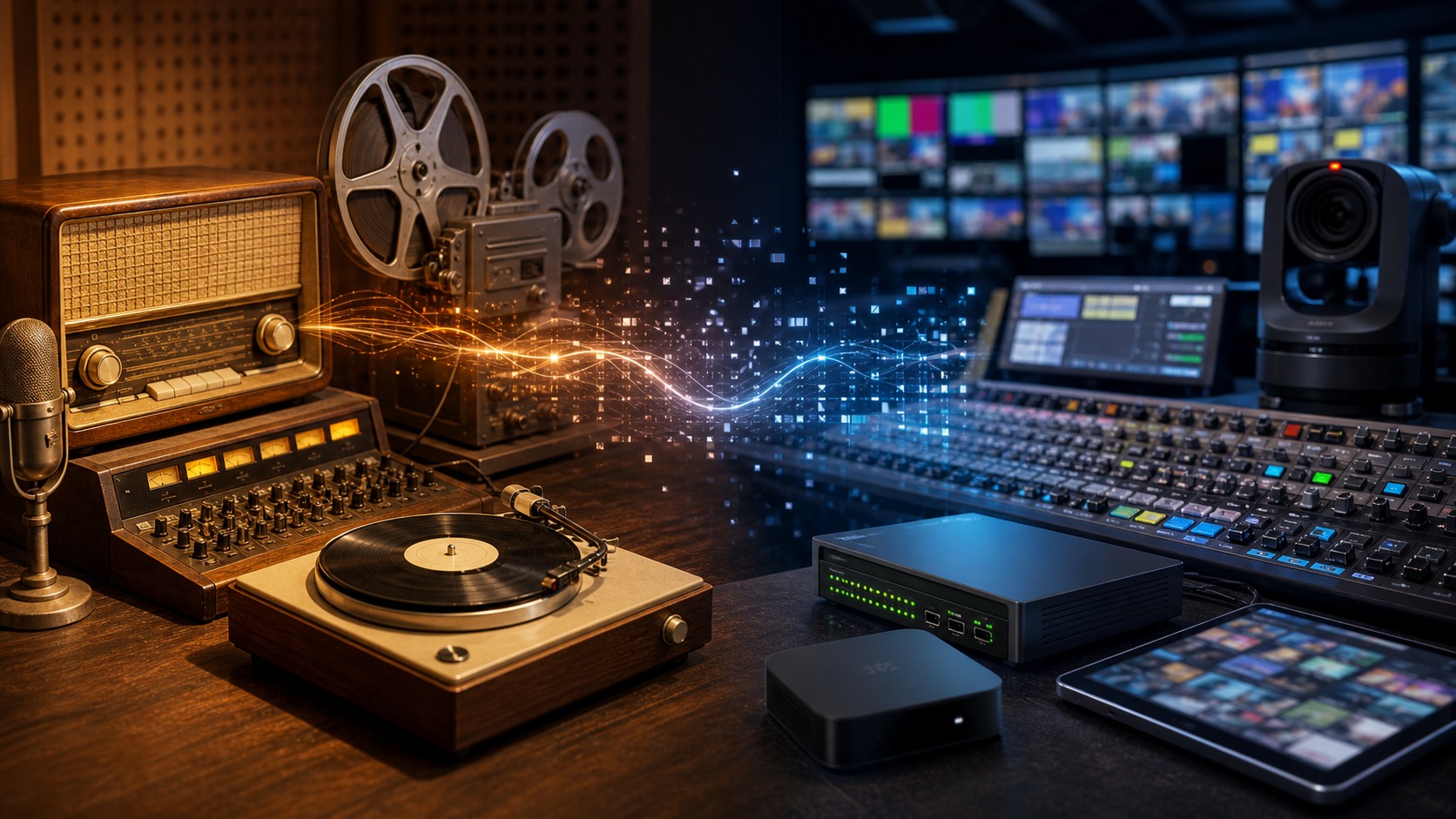
How Broadcasting Technology Works: From Signal to Screen is more than a phrase on a content calendar. It points to a practical communication problem: how people discover information, decide whether to trust it, and choose what to do next. In Broadcasting Technology, the answer rarely comes from one clever message alone. It comes from matching the right idea with the right audience, the right channel, and the right moment. This guide explains the topic through a signal journey lens so the concept feels clear, useful, and ready to apply.
A: It is audio, video, or data prepared for delivery to receivers.
A: It is captured, encoded, transmitted, received, decoded, and displayed.
A: It strengthens and sends the signal over air, cable, satellite, or networks.
A: Encoding converts video and audio into a format that can be transmitted efficiently.
A: Processing, encoding, transmission, buffering, and decoding all add small delays.
A: Bandwidth is the capacity available to carry signal or data.
A: Streaming is internet-based delivery, while traditional broadcasting sends one signal to many receivers.
A: Pixelation happens when data is missing, compressed too heavily, or signal quality drops.
A: A codec compresses and decompresses audio or video.
A: The receiver decodes the signal and displays the content on the screen.
The signal begins at the source
The signal begins at the source matters because signal journey is easiest to understand when it is connected to a real communication decision. For an article like How Broadcasting Technology Works: From Signal to Screen, the practical question is not whether the idea sounds impressive, but whether a person can use it with confidence. A useful way to think about it is to follow the path from audience need, to message choice, to channel behavior, to measurable response. That path keeps the work grounded: every tactic has a job, every example has a reason, and every result can be traced back to a communication choice.
That path keeps the work grounded: every tactic has a job, every example has a reason, and every result can be traced back to a communication choice. Beginners often look for the perfect tool first, but experienced communicators usually start by clarifying the situation the tool is supposed to improve. When the situation is clear, the strategy becomes calmer, easier to explain, and much easier to adapt when audience behavior changes. The best plans also leave room for listening, because communication is rarely a one-way transfer of information.
Encoding turns media into manageable data
For an article like How Broadcasting Technology Works: From Signal to Screen, the practical question is not whether the idea sounds impressive, but whether a person can use it with confidence. A useful way to think about it is to follow the path from audience need, to message choice, to channel behavior, to measurable response. That path keeps the work grounded: every tactic has a job, every example has a reason, and every result can be traced back to a communication choice. Beginners often look for the perfect tool first, but experienced communicators usually start by clarifying the situation the tool is supposed to improve.
Beginners often look for the perfect tool first, but experienced communicators usually start by clarifying the situation the tool is supposed to improve. When the situation is clear, the strategy becomes calmer, easier to explain, and much easier to adapt when audience behavior changes. The best plans also leave room for listening, because communication is rarely a one-way transfer of information. Strong execution comes from repeating the right signals consistently enough that people know what the message means and why it matters.
Switching and routing keep programs moving
A useful way to think about it is to follow the path from audience need, to message choice, to channel behavior, to measurable response. That path keeps the work grounded: every tactic has a job, every example has a reason, and every result can be traced back to a communication choice. Beginners often look for the perfect tool first, but experienced communicators usually start by clarifying the situation the tool is supposed to improve. When the situation is clear, the strategy becomes calmer, easier to explain, and much easier to adapt when audience behavior changes.
When the situation is clear, the strategy becomes calmer, easier to explain, and much easier to adapt when audience behavior changes. The best plans also leave room for listening, because communication is rarely a one-way transfer of information. Strong execution comes from repeating the right signals consistently enough that people know what the message means and why it matters. Switching and routing keep programs moving matters because Broadcasting Technology is easiest to understand when it is connected to a real communication decision.
Transmission sends content across networks
That path keeps the work grounded: every tactic has a job, every example has a reason, and every result can be traced back to a communication choice. Beginners often look for the perfect tool first, but experienced communicators usually start by clarifying the situation the tool is supposed to improve. When the situation is clear, the strategy becomes calmer, easier to explain, and much easier to adapt when audience behavior changes. The best plans also leave room for listening, because communication is rarely a one-way transfer of information.
The best plans also leave room for listening, because communication is rarely a one-way transfer of information. Strong execution comes from repeating the right signals consistently enough that people know what the message means and why it matters. Transmission sends content across networks matters because Broadcasting Technology is easiest to understand when it is connected to a real communication decision. For an article like How Broadcasting Technology Works: From Signal to Screen, the practical question is not whether the idea sounds impressive, but whether a person can use it with confidence.
Receivers rebuild the experience
Beginners often look for the perfect tool first, but experienced communicators usually start by clarifying the situation the tool is supposed to improve. When the situation is clear, the strategy becomes calmer, easier to explain, and much easier to adapt when audience behavior changes. The best plans also leave room for listening, because communication is rarely a one-way transfer of information. Strong execution comes from repeating the right signals consistently enough that people know what the message means and why it matters.
Strong execution comes from repeating the right signals consistently enough that people know what the message means and why it matters. Receivers rebuild the experience matters because Broadcasting Technology is easiest to understand when it is connected to a real communication decision. For an article like How Broadcasting Technology Works: From Signal to Screen, the practical question is not whether the idea sounds impressive, but whether a person can use it with confidence. A useful way to think about it is to follow the path from audience need, to message choice, to channel behavior, to measurable response.
Latency, quality, and reliability tradeoffs
When the situation is clear, the strategy becomes calmer, easier to explain, and much easier to adapt when audience behavior changes. The best plans also leave room for listening, because communication is rarely a one-way transfer of information. Strong execution comes from repeating the right signals consistently enough that people know what the message means and why it matters. Latency, quality, and reliability tradeoffs matters because signal journey is easiest to understand when it is connected to a real communication decision.
Latency, quality, and reliability tradeoffs matters because Broadcasting Technology is easiest to understand when it is connected to a real communication decision. For an article like How Broadcasting Technology Works: From Signal to Screen, the practical question is not whether the idea sounds impressive, but whether a person can use it with confidence. A useful way to think about it is to follow the path from audience need, to message choice, to channel behavior, to measurable response. That path keeps the work grounded: every tactic has a job, every example has a reason, and every result can be traced back to a communication choice.
Why the invisible workflow matters
The best plans also leave room for listening, because communication is rarely a one-way transfer of information. Strong execution comes from repeating the right signals consistently enough that people know what the message means and why it matters. Why the invisible workflow matters matters because signal journey is easiest to understand when it is connected to a real communication decision. For an article like How Broadcasting Technology Works: From Signal to Screen, the practical question is not whether the idea sounds impressive, but whether a person can use it with confidence.
For an article like How Broadcasting Technology Works: From Signal to Screen, the practical question is not whether the idea sounds impressive, but whether a person can use it with confidence. A useful way to think about it is to follow the path from audience need, to message choice, to channel behavior, to measurable response. That path keeps the work grounded: every tactic has a job, every example has a reason, and every result can be traced back to a communication choice. Beginners often look for the perfect tool first, but experienced communicators usually start by clarifying the situation the tool is supposed to improve.
Putting How Broadcasting Technology Works: From Signal to Screen Into Practice
The most useful next step is to turn the idea into a small working system. Define the audience, name the change you want to create, choose the channels that fit the audience’s habits, and decide what evidence will show progress. Keep the first version simple enough to manage, then improve it with observation. That rhythm helps Broadcasting Technology work become less mysterious and more dependable.
How Broadcasting Technology Works: From Signal to Screen ultimately becomes powerful when it helps people communicate with more clarity and less guesswork. The goal is not to chase every trend or copy every example. The goal is to understand the human decision underneath the tactic, then build communication that respects attention, earns trust, and gives the audience a clear reason to keep listening.
Another practical detail is consistency. People usually need repeated, recognizable signals before a message feels familiar enough to trust. For How Broadcasting Technology Works: From Signal to Screen, that means the voice, examples, visuals, timing, and call to action should feel connected across the full experience. Consistency does not mean saying the same sentence everywhere. It means making each touchpoint feel like part of the same thoughtful conversation.
Another practical detail is consistency. People usually need repeated, recognizable signals before a message feels familiar enough to trust. For How Broadcasting Technology Works: From Signal to Screen, that means the voice, examples, visuals, timing, and call to action should feel connected across the full experience. Consistency does not mean saying the same sentence everywhere. It means making each touchpoint feel like part of the same thoughtful conversation.
Another practical detail is consistency. People usually need repeated, recognizable signals before a message feels familiar enough to trust. For How Broadcasting Technology Works: From Signal to Screen, that means the voice, examples, visuals, timing, and call to action should feel connected across the full experience. Consistency does not mean saying the same sentence everywhere. It means making each touchpoint feel like part of the same thoughtful conversation.
Another practical detail is consistency. People usually need repeated, recognizable signals before a message feels familiar enough to trust. For How Broadcasting Technology Works: From Signal to Screen, that means the voice, examples, visuals, timing, and call to action should feel connected across the full experience. Consistency does not mean saying the same sentence everywhere. It means making each touchpoint feel like part of the same thoughtful conversation.
Another practical detail is consistency. People usually need repeated, recognizable signals before a message feels familiar enough to trust. For How Broadcasting Technology Works: From Signal to Screen, that means the voice, examples, visuals, timing, and call to action should feel connected across the full experience. Consistency does not mean saying the same sentence everywhere. It means making each touchpoint feel like part of the same thoughtful conversation.